

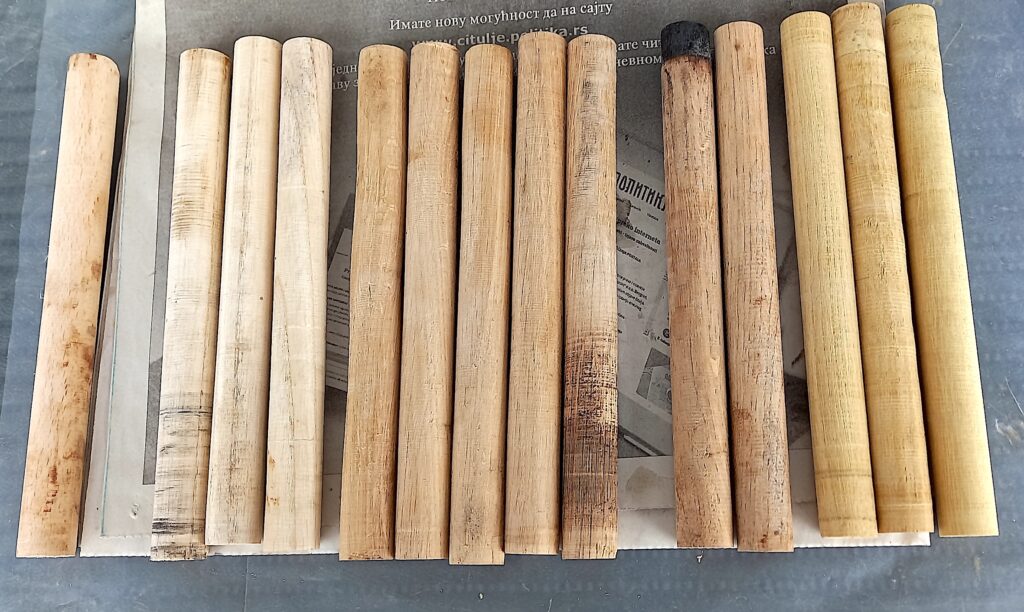
Drveni umetak nalazi se na držaču mušičarskog čekrka kod svih klasično urađenih mušičarskih štapova koji se koriste za mušičarenje na kopnenim vodama. Umetci se prave isključivo od tvrdog drveta, a to su dominantno listopadne vrste ili tropske vrste koje imaju lišće preko cele godine. Četinarske vrste i neke listopadne (npr. lipa, vrba i topola) imaju meko drvo i zbog toga i drugih svojstava manje su pogodni za izradu umetaka. Korišćenje drveća koje nije egzotično (tj. tropsko) za izradu držača čekrka prilično je retko. Pri tome, neke od vrsta drveta (iako je nezahvalno pisati o estetskim stvarima) koje ne spadaju u egzotična kao što su američki crni orah i šećerni javor daju takve držače koji su među najlepšima uopšte, i renomirani proizvođači ih često koriste. Tako Winston za skoro sve modele koristi umetke od javora, a Sage je imao dosta modela sa umetcima od crnog oraha. I sam mislim da je većina ovih umetaka dovoljno fina da se takmiči sa egzotičnim vrstama za mesto na držaču čekrka. Ipak, mnogi štapovi nose držače sa umetkom od vera drveta, kokoboloa, afričke ruže, sandalovog drveta, abonosa, honduraske trešnje i dr., čija lepota je nesumnjiva, posebno ako su još i tehnološki savršeno obrađeni. Osim izgleda, ovi umetci imaju i visok sadržaj etarskih ulja i smolastih supstanci u sebi, pa ne zahtevaju složenu tehnološku obradu i imaju visoku prirodnu otpornost prema vlazi i štetočinama.
Wood insert stands at the fly reel seat in all classic freshwater fly rods. Inserts are crafted using exclusively hardwood, which are predominantly deciduous tree species of moderate clime zone or tropical species that are evergreen throughout a year. Coniferous and certain deciduous tree species (e.g., linden, willow and poplar) have soft wood and owing to that and other features are less convenient for inserts’ crafting. Use of non-exotic (i.e., non-tropical) wood for reel seat crafting is pretty rare. Some of trees’ wood that are not exotic, e.g., North American black walnut and sugar maple give the wood inserts that are among the nicest at all (although it is not recommendable stating anything about aesthetics) and renowned branded fly rod crafters use them often. E.g., Winston uses reel seats with the maple wood inserts and Sage had models with the black walnut wood insert. Many of native woods are nice enough to compete with exotic species for standing at reel seat. Nevertheless, many rods have reel seats with the wood inserts of vera, cocobolo, rosewood, sandalwood, ebony, etc., whose beauty is out of question, especially when they are perfectly finished. Apart of the eye-catching look, those woods have high content of etheric oils and resin substances. Therefore, they don’t demand complex preparation and have high resilience to pests and resistance to moist.
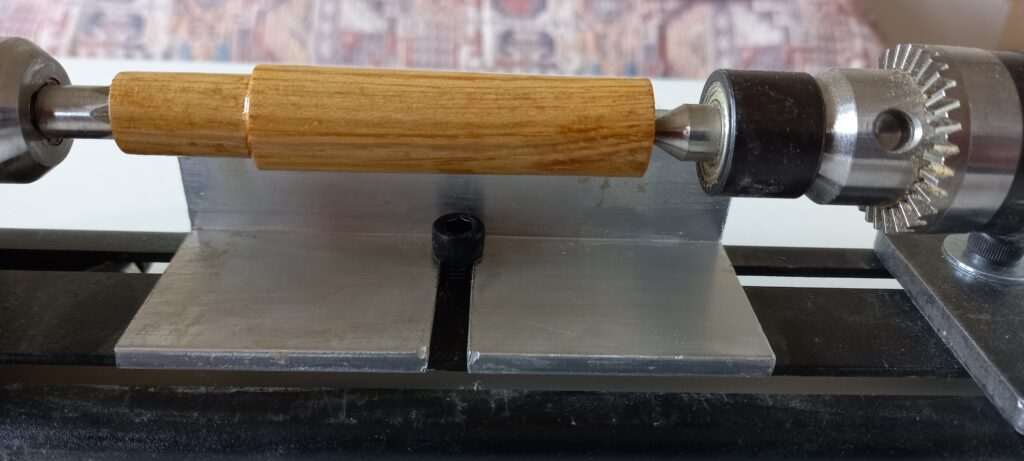
Za razliku od njih, navodno, ne-egzotične vrste znatno su siromašnije tim supstancama. Zbog toga, navodno zahtevaju jaču zaštitu, a u novije vreme navodi se i neophodnost primene postupka stabilizacije-tretmana smolastim supstancama u vakuumu radi postizanja takve otpornosti. Je li to opravdano ili nije, svako može da prosudi sam jednostavim odgovorom na pitanje: kako su pre primene stabilizacije držači mušičarskih čekrka trajali toliko koliko su trajali? Pošteno je reći da je stabilizacija korisna i da je takvo drvo zaista trajnije. Za drveni umetak ipak je manje značajna, sem ako se pri svakom skidanju ulova štap spušta u vodu.
In difference to them, allegedly, non-exotic wood species are scarcer in those substances. Owing to that, they allegedly demand stronger protection and in the last decades, the necessity of stabilisation treatment with the resins in the vacuum environment was imposed for attaining such resilience. Wether is it truly justified, one can judge easily recalling how long was fly reel seats lifetime before the introduction of stabilisation. It is fair to state that stabilisation is useful and makes wood longer-lasting. But it is of lesser importance for reel seat’s wood insert, unless one puts the rod into the water each time on unhooking the fish.
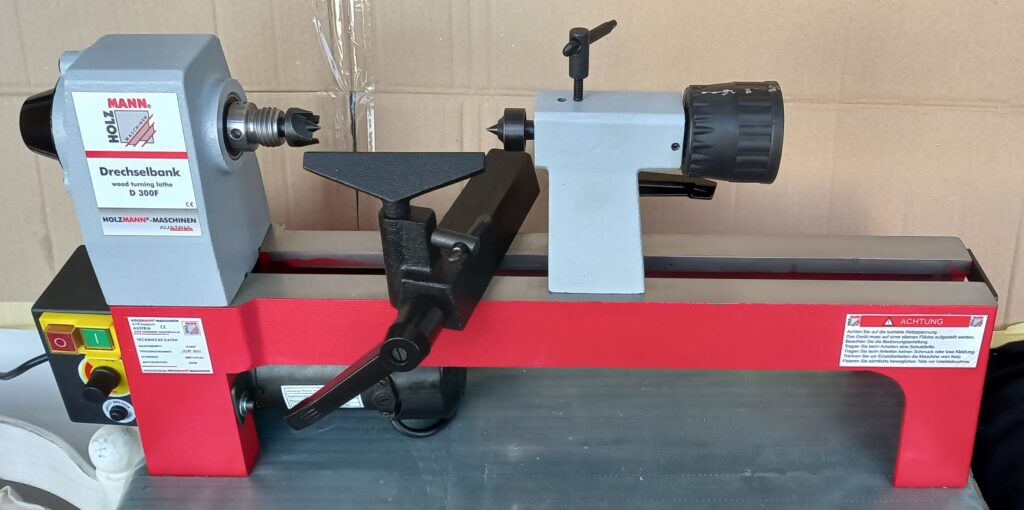
Voda sama po sebi ne deluje toliko na zaštićeni drveni umetak, koliko ono što ona sa sobom nosi, bilo kao prirodni sadržaj, ili kao zagađenje. Hemizam vode može biti vrlo raznolik i njeno korozivno dejstvo na drvo i njegovu zaštitu snažno. Kišnica je najneutralnija, bar izvan gradskih i industrijskih područja i ne bi trebalo da znatnije utiče na zaštićeni drveni umetak. U normalnim uslovima, mušičarski štap se ne namače u vodi, a slučajno, kratkotrajno kvašenje ili ribolov po celodnevnoj kiši ne mogu oštetiti dobro obrađen drveni umetak, ni spolja, niti iznutra.
Water itself doesn’t impact well protected wooden insert that much as its chemical contents does, either natural, or a content as a consequence of pollution. Chemism of water can vary greatly and its corosive impact on wood and daubs can be very strong. The rain water is most neutral, at least out of urban and industrial areas and shouldn’t affect remarkably the protected wood inserts. One usually doesn’t soak rod into water, and short term, non-deliberate dipping or whole rainy day fishing can’t damage the well-protected wood insert either outside, or inside.
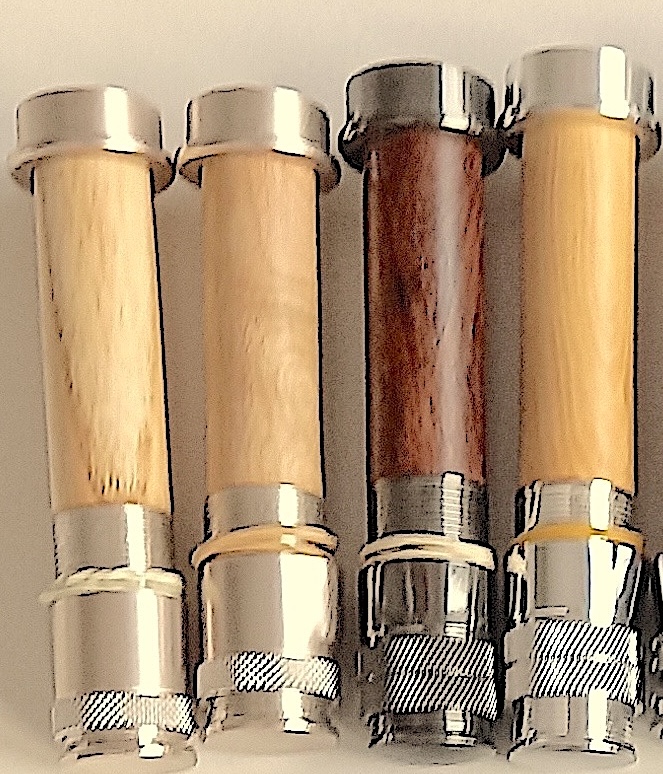
walnut and oriental plane.
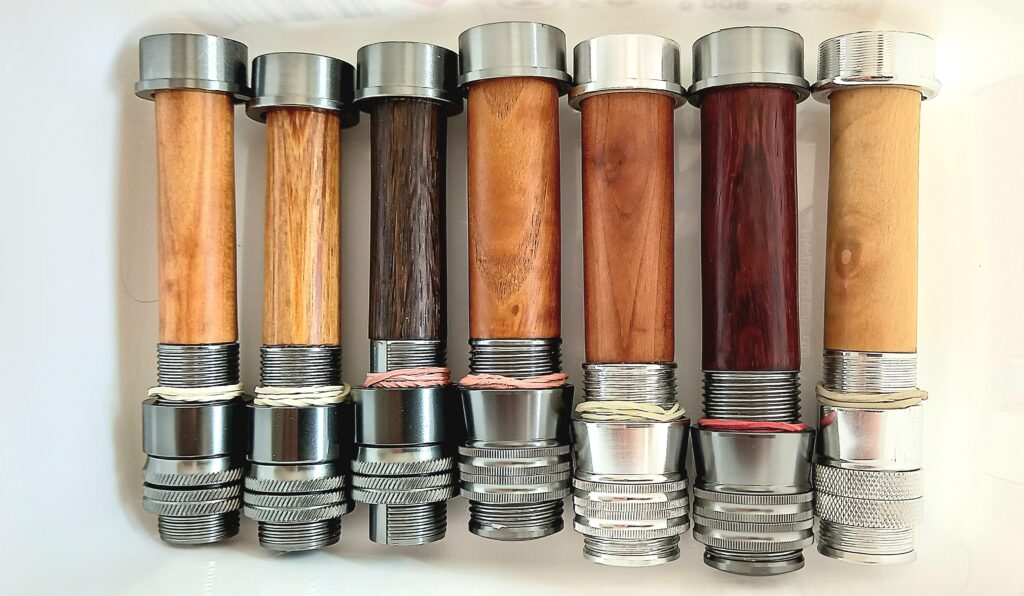
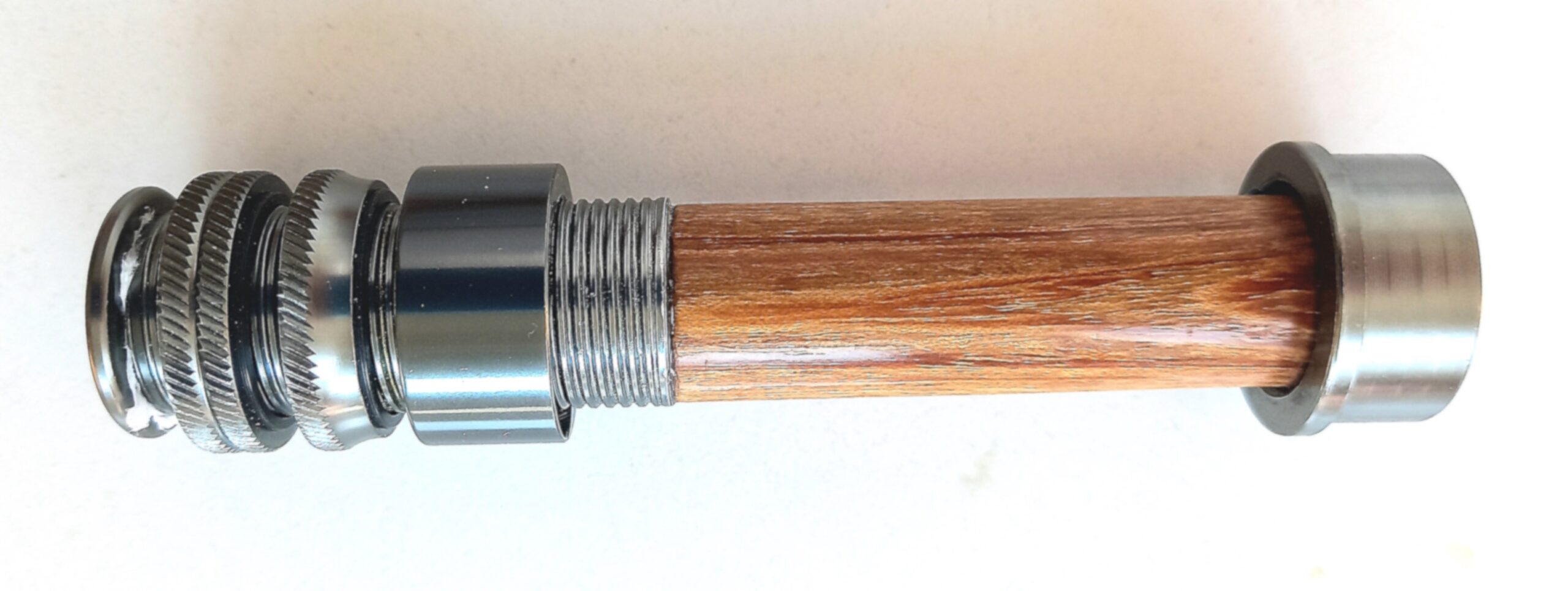
Završeni držači čekrka sa umetcima od japanske dunje, bagrema, „abonosa“, duda, trešnje, sandalovog drveta I klena / Reel seats wit the wood inserts of Maule’s quince, black locust, bog oak, mulberry, sweet cherry, sandalwood and field maple
Skeptičnost prema pričama o otpornosti komercijalnih umetaka na vlagu stekao sam kada se nakon dva slučajna, vrlo kratka ispuštanja i trenutna umakanja štapa sa kupljenim drvenim umetkom od kamforovog drveta, sa potonjim celodnevnim ribolovom po izuzetno upornoj i jakoj kiši, umetak promenio-dobio je površinsku naprslinu promenjene boje koja tek treba da bude pažljivo ispitana, kako bi se videlo šta raditi s nom. Mogućnost mehaničkog oštećenja drveta ne dolazi u obzir – promena je isključivo zbog loše završne zaštite inače odlično urađenog umetka.
My scepticism towards a resilience of commercial inserts’ to moist and water has arose when after two non-deliberate and instantaneous dips of rod with the purchased insert of golden camphor wood and subsequent whole day of fishing at hard and persistent rain it changed by developing superficial, discolouration under the crack that yet has to be carefully inspected, to decide how to cope with it. A possibility of the mechanical damage of the wood is out of question – the damage is exclusively a consequence of bad finish of the otherwise excellently crafted insert.
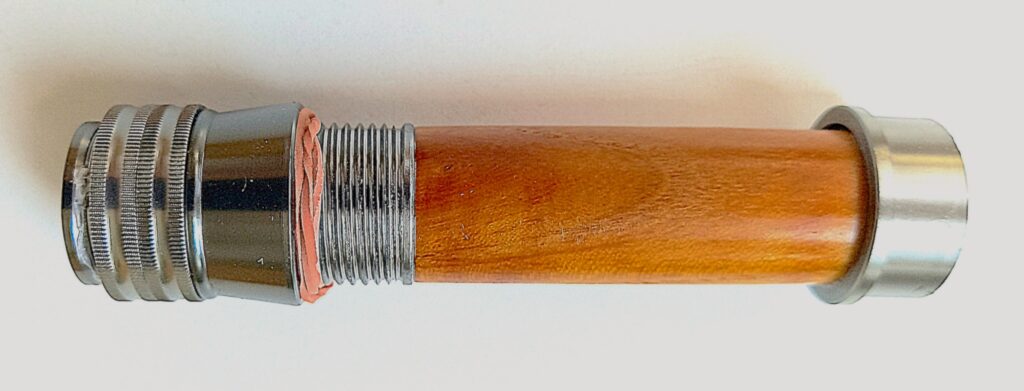
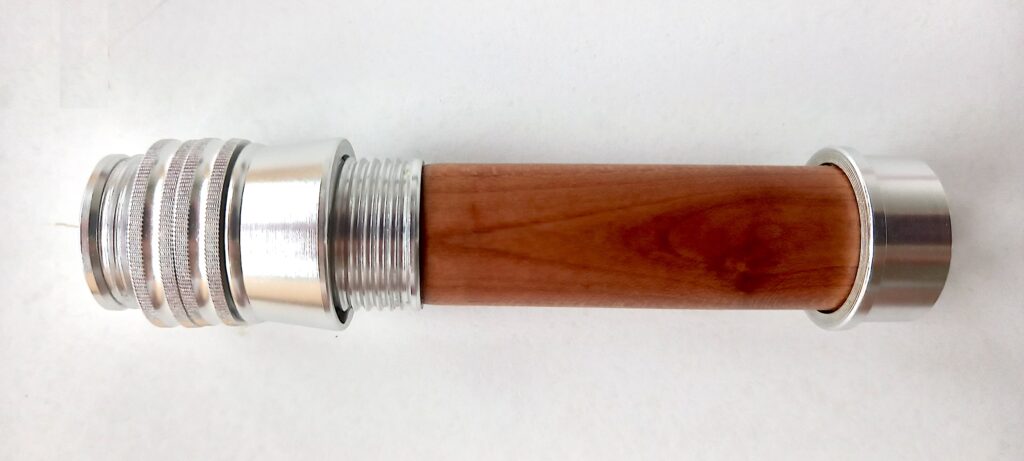
Završna zaštita spolja najčešće se vrši uljanim, poliuretanskim ili (cijano-)akrilnim lakovima. Kod nas je vrlo teško doći do zaštitnih premaza koji su prirodni i nemaju kao osnovu neki aromatični (benzenov prsten) rastvarač i zasad se u svrhu zaštite prirodnim sredstvom koriste ulje od semenki lana („laneno ulje“), Tung ulje i dobro poznati firnajz koji može biti na bazi lanenog ili sojinog ulja, sa mineralnim dodacima. Njihova prednost nad ostalim zaštitinim sredstvima je što je njihovo nanošenje veoma lako pomoću četkice ili krpice (ja koristim prst za čisto, pravo laneno ulje), kao i to što njih suvo drvo upija u sebe unutra, dok ga sva ostala zaštitna sredstva samo pokrivaju na površini bez upijanja u drvo ispod nje. Oni se mogu nositi sa povremenim trenutnim kvašenjima ili kišom. Što se unutrašnje strane tiče, dobro urađen štap sa plutanim rukohvatom i držačem čekrka dobro zalepljenim kvalitetnim epoksidnim lepkom ne dozvoljava prodor vode ili vlage unutra. Višestrukim nanošenjem ulja uz povremeno glačanje najfinijim brusnim papirom dobija se glatka, sjajna ili polusjajna površina drvenog umetka koja vremenom može malo matirati, ali se održavanjem lako povrati, ako se to želi. Jedna od mana takve zaštite tokom izrade umetka je dugo vreme potrebno da se ulje potpuno upije u drvo pre nanošenje sledećeg sloja. Broj nanosa-slojeva potrebnih da se postigne potreban završni kvalitet drvenog umetka zavisi od svojstava drveta koje se koristi, ali je retko mani od deset.
Usual external protection of the wood insert is by oil-, polyurethane-, or (cyan-)acrylic-based laquers. It is not easy to get the wood-protective daub that is natural and don’t have some highly toxic and even cancer-risky aromatic (i.e., benzyl ring based) solvent. Such natural protective means are linseed oil, Tung oil and Tru oil, which is either linseed oil-, or soybean oil-based, with the mineral additives. Their advantage over the other protective is that their applying is very easy using either brush of fabric patch (I myself use finger for genuine and pure linseed oil), as well as they soak into the dried wood, while all other finishes only cover them, without going deeper from surface. They can sustain occasional instantaneous dippings, or rain. As for the inner side of the wood insert, well-crafted fly fishing rod with the cork handle and reel seat firmly bonded using the quality epoxy glue doesn’t allow water or moisture to penetrate inside. Multiple covering with the oil accompanied with the buffing with the finest sandpaper results in a smooth, shiny surface of the wood insert that can become slightly matte in time, but that shiny look is easily restored, if one wants to do that. One of the disadvantages of such protecting in crafting the insert is a long time necessary for a complete absorbing (i.e., soaking) the oil into the wood before the next layer can be applied. The number of layers necessary to achieve the quality finish of the wood insert depends on the wood’s properties, but it is rarely less than ten.
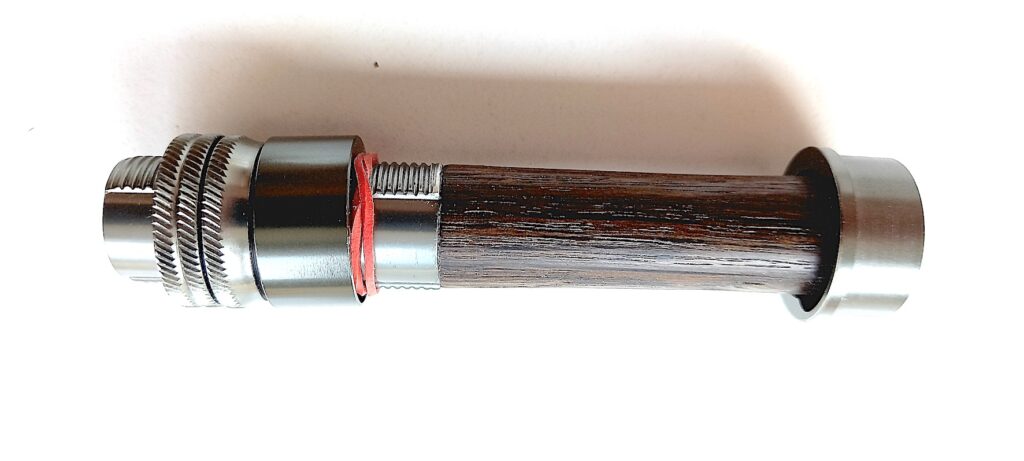
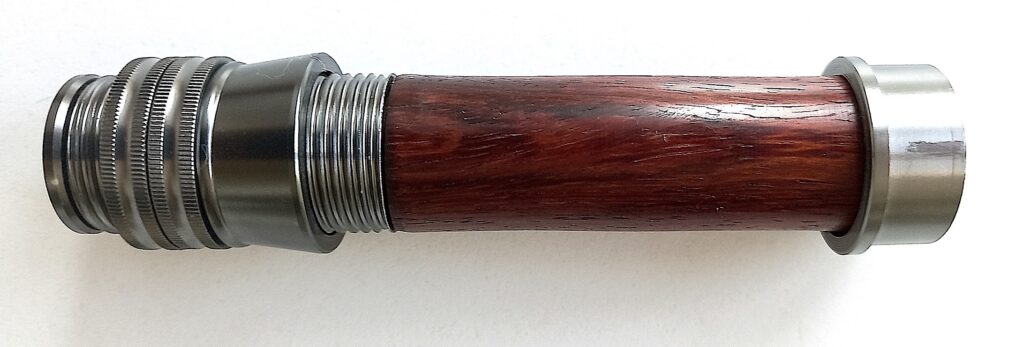
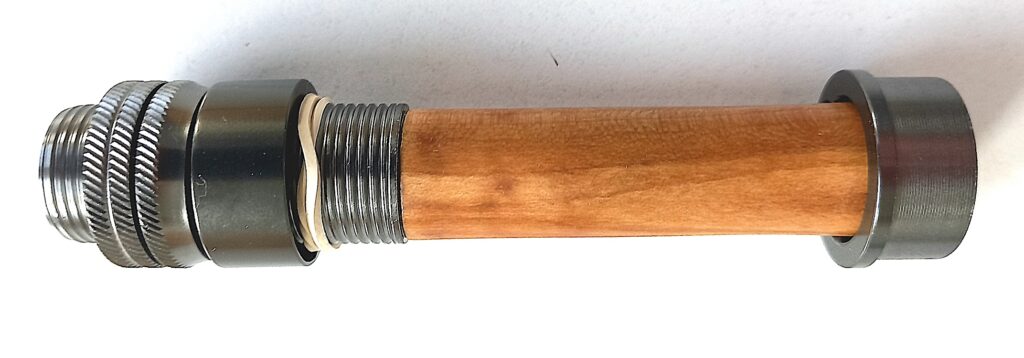
Držač čekrka sa umetkom od „abonos“ drveta iz močvarnog mulja / Reel seat with the „ebony“ i.e., bog oak wood insert
Držač čekrka sa umetkom od bagrema / Reel seat with the black locust insert
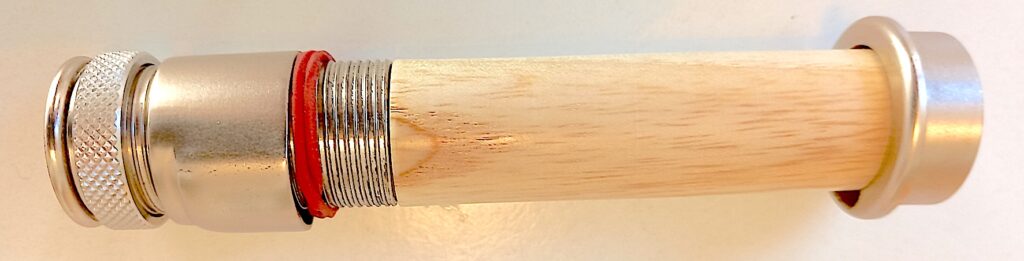
Držač čekrka sa sa vrlo laganim skeletom u šampanj završnoj obradi i sa umetkom od jasena / Reel seat with the ash insert
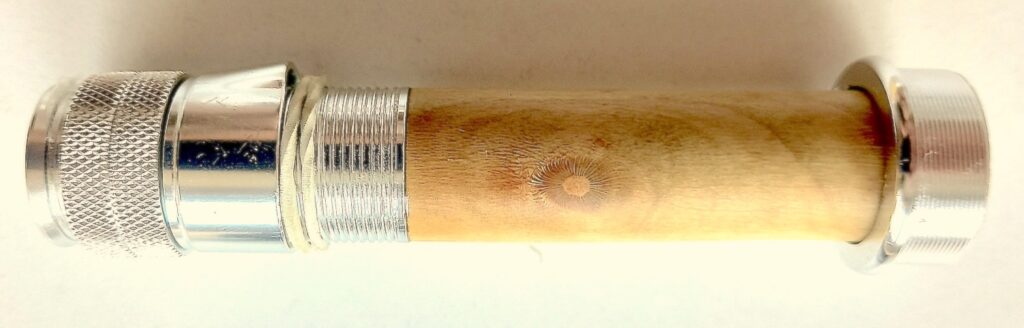
Držač čekrka sa umetkom od klena / Reel seat with the field maple insert
Svaki od umetaka može se nakon zaštite lanenim uljem ili firnajzom dodatno premazati nekim zaštitnim sredstvom. Obavezan je uslov da se izuzetno dobro osuši, što znači da se posle nekoliko dana sušenja-upijanja na temperaturi preko 22oC (bez direktnog izlaganja suncu, na promajnom mestu) premaže i suši onako kako proizvođač sredstva upućuje. Ipak, samo laneno ulje pokazalo se kao dovoljno zaštitno sredstvo i izdržalo je bez ikakvih problema sezone umerenog korišćenja na mojim štapovima. Eventualno održavanje vrlo je jednostavno: nakon laganog brisanja krpom namočenom blagim rastvorom tečnog sapuna i mlakom vodom, brisanja vlažnom krpom i temeljnog sušenja, sledi pažljivo, nežno poliranje jako finom (finoće 1500-3000) šmirglom, jedan ili dva premaza lanenim uljem i višesatno sušenje u hladovini. To će obnoviti otpornost na vlagu i vodu.
Every wood insert can be additionally coated with other protective varnish after using the linseed oil or Tru Oil. It is mandatory to dry insert thoroughly, which means several days of drying-absorbing on the temperature over 22 Centigrades (72o Fahrenheit) in shadow and at the place exposed to airstream. Then the insert is to be varnished. Nevertheless, linseed oil solely revealed as sufficient preserver and sustained seasons of modest use on my own fishing rods by all means. Maintenance, if any at all, is easy: after tender wiping with the cloth soaked in mild liquid soap solution and lukewarm water, wet cloth wiping and thorough drying, a careful polishing with the high-numbered grit (e.g., 1500-3000) sanding paper should follow. One or two linseed oil covers and drying in shadow will restore moisture- and water-resistance.
Posle mnogo godina ribolova, tokom dugog zimskog lovostaja, rešio sam da popravim umetke od američkog javora i od afričkog abonosa na svojim St. Croix štapovima zbog manjih oštećenja od glava šrafova sa stopa čekrka. Delimične, lokalne popravke nisu dale dobar rezultat, pa sam odlučio da restauriram ceo drveni umetak. Nakon skidanja laka i nekoliko nanosa lanenog ulja sa poliranjem između, dobio sam glatkiji i bogatiji izgled tih drvenih umetaka od onog kakav je bio kod originalnih. Odlazak u ribolov takođe je pokazao da je zaštita lanenim uljem sasvim dovoljna. Tako sam stekao poverenje u to zaštitno sredstvo.
After many years of fishing, during the long winter closed season and without actual necessity, I decided to repair inserts of American birdseye maple and African ebony on my St. Croix fly fishing rods, owing to few scratches from screws at reels’ feet. The partial repair didn’t show well, so I decided to restore the whole wood insert. After sanding the original varnish, several layers of linseed oil and polishing between covers, I had smoother and richer look of those wood inserts than it was originally. Fishing with those rods confirmed that protection with the linseed oil is sufficient. This built my confidence in that protective mean.
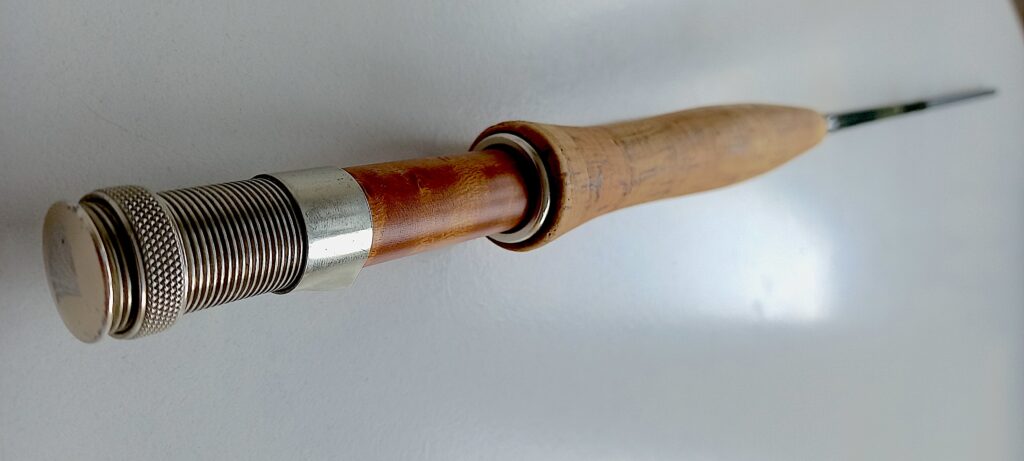
Javorov umetak / Birdseye maple reel seat insert
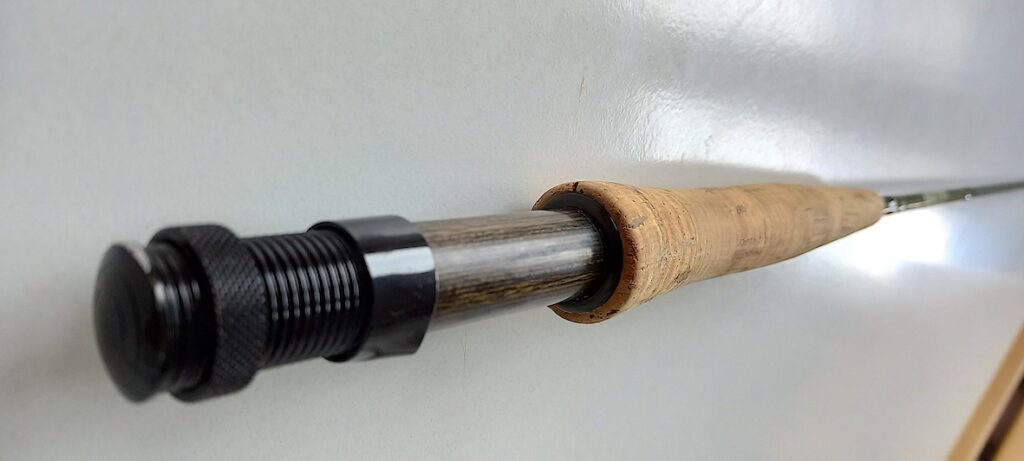
Abonos umetak / Ebony reel seat insert
Javorov umetak / Birdseye maple reel seat insert
Abonos umetak / Ebony reel seat insert
Iako su neke vrste drveta gušće i tvrđe, a druge manje guste i nešto mekše, pri veličini i obliku koju drveni umetci imaju njihove težine nisu suviše različite. Ipak, razlike postoje, pa su dosad najlakši bili umetci približne veličine od klena-javora, leske, japanske dunje, bagrema (6 g) i orijentalnog platana (7 g), a najteži od sandalovog i australijskog Pinkwood drveta (14-15 g), dok su većina ostalih bili ujednačene težine (9-11 g). Ono što može više uticati na balans štapa od samog umetka je skelet (hardware) držača čekrka i o tome bi trebalo voditi računa prilikom odabira za štap određene snage, tj. AFTMA klase-težine bacanja.
Although some tree species’ wood are denser and harder, and others are sparser and softer, at inserts’ size and shape their weights are not that different. Nevertheless, some differences do exist. The lightest inserts so far were those of the field maple, Maule’s quince and black locust (6 g, i.e., 0.21 oz), and of the hazel and oriental plane trees (7 g, i.e., 0.25 oz), the heaviest were those of the sandalwood and Australian pinkwood (14-15 g, i.e., 0.5 oz), whereas others were somewhere in between (9-11 g, i.e., 0.3-0.4 oz). What can more affect the rod’s balance is the reel seat’s skeleton and that should be cared about when choosing one.
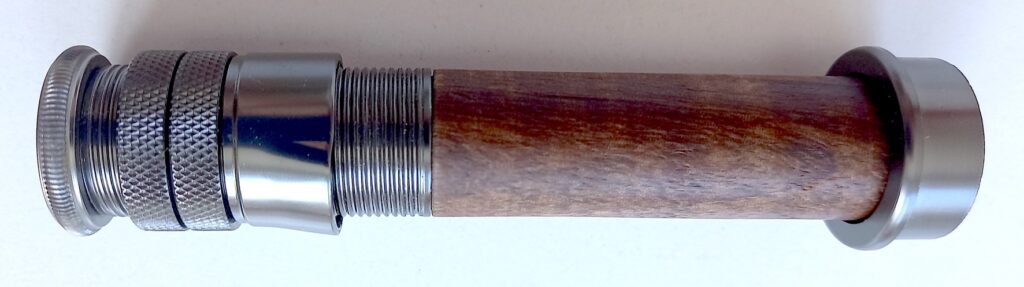
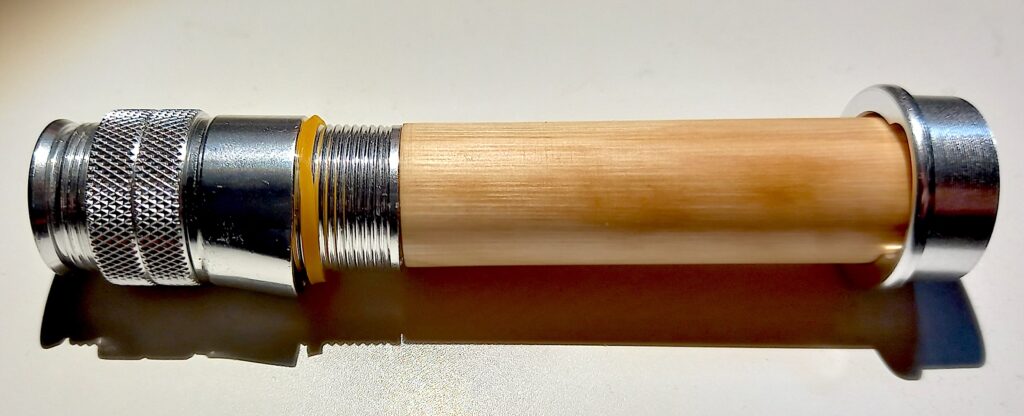
Proizvođači mušičarskih štapova tradicionalnog dizajna uglavnom stavljaju ujednačene, standardne drvene umetke kako bi svi štapovi nekog modela izgledali isto. Retko se vide umetci teksture koja odstupa od toga. Nasuprot tome, kod pojedinih malih proizvođača mušičarskih štapova mogu se videti umetci koji se dobiju iz nepravilnih komada nekih vrsta drveta (npr. javora), veoma neobične teksture. Neke od tekstura imaju i svoje usvojene nazive i predstavljaju dodatni ukras držača čekrka i štapa na kome je on. Nikad se ne zna tačno unapred kakva će se tekstura dobiti od komada drveta koji počne da se radi i razna iznenađenja su moguća, što drveni umetak čini jedinstvenim komadom.
Manufacturers of traditionally designed fly fishing rods mainly put even, standard wood inserts, aiming to produce all rods in a model looking same. Inserts of the texture away of that are rare to see. In contrast to that, at fly rods made by particular small crafters one can see wood inserts of the very peculiar textures, turned from deformed pieces of some tree species (e.g., maple). Some of textures have their established names and decorate additionally both reel seats and fly fishing rods having them. One never knows in advance what texture will get out from the wood piece when start crafting it and various surprises are possible, making the wood insert a unique piece.
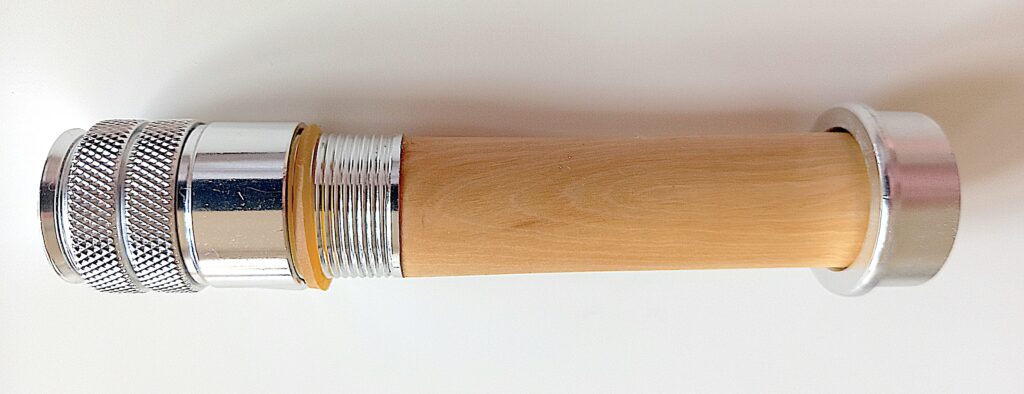
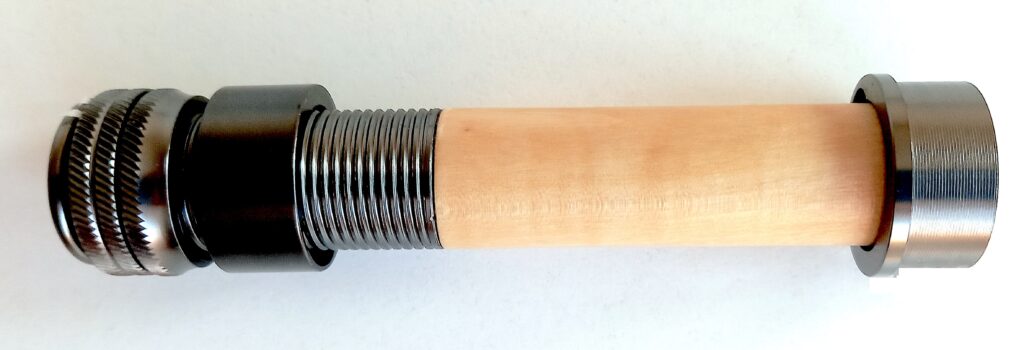
Držač čekrka sa drvenim umetkom od javora / Reel seat with the insert made of the tiger sycamore maple wood
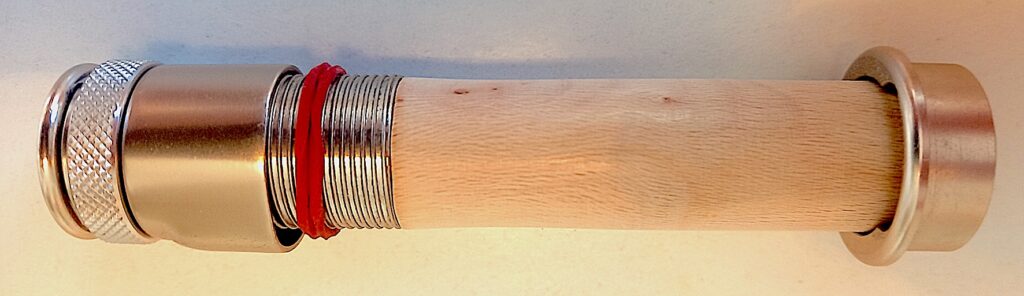
Naravno, svi prikazani uzorci drvenih umetaka i držači čekrka različitih modela sa tim umetcima, pored izbora za ugradnju u štapove koji se naruče, mogu se naručiti i zasebno, na isti način na koji se naručuju i štapovi. Za držač mušičarskog čekrka, potrebno je izbrati model hardvera i vrstu drveta za umetak, a vreme izrade zavisi od trenutne dostupnosti hardvera i drveta određene vrste. Svaki drveni umetak je zasebno napravljen, jedinstven primerak urađen za izabrani tip hardvera držača čekrka. Sem toga, dostupni su i gotovi držači čekrka sa egzotičnim umetcima.
Of course, all presented samples of wooden inserts and various models of reel seats supplied with them are available both separately and together with the rod that is ordered, in a same way as ordering the rod. It is necessary to choose the make of reel seat hardware and kind of wood insert, and the time of crafting the insert or whole reel seat depends on the availability of hardware and particular wood. Each wood insert is custom crafted, unique piece adapted for particular type of reel insert’s hardware. In addition, the factory-crafted reel seats with the exotic wood inserts are also available.
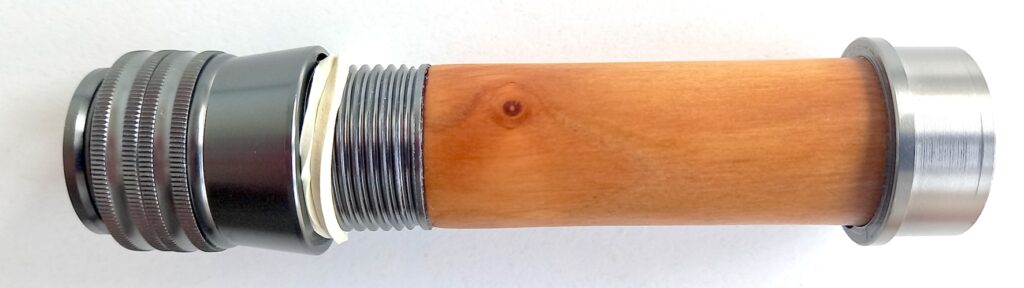
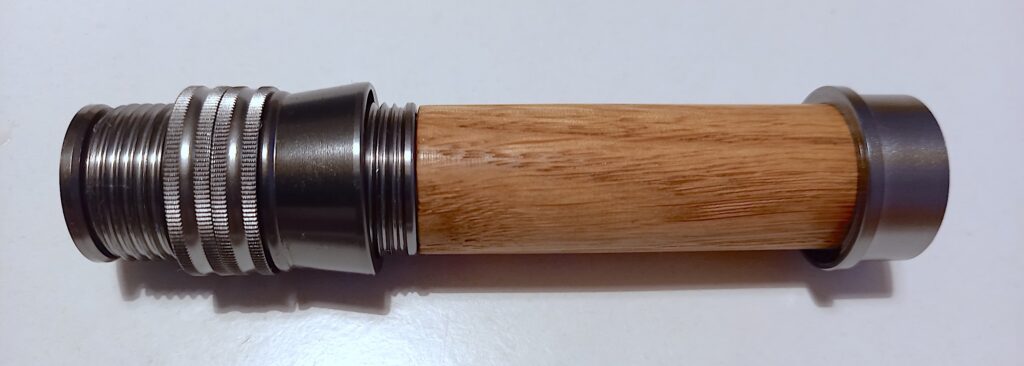
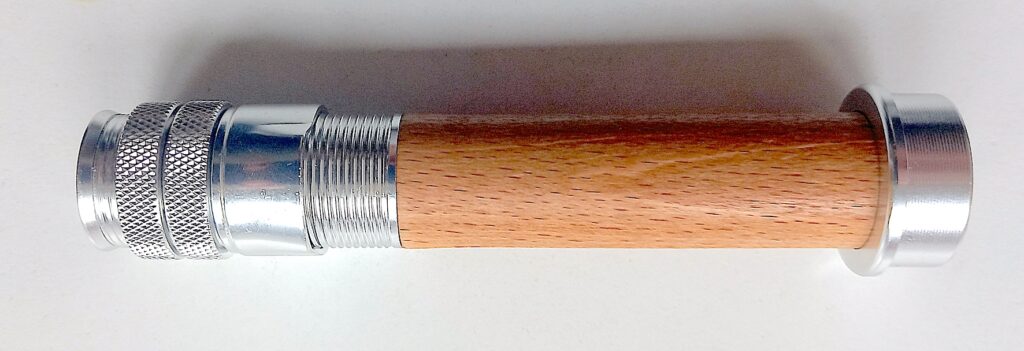
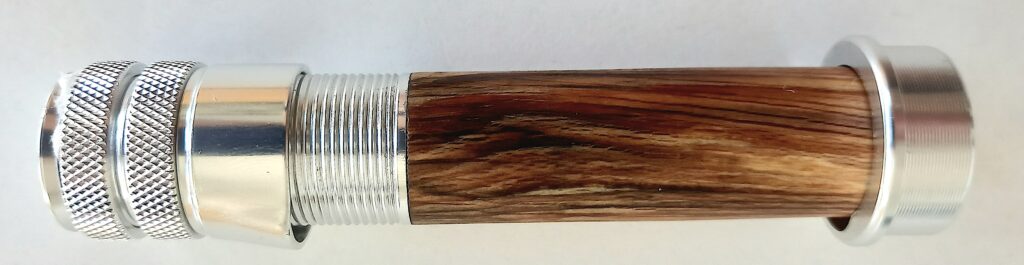
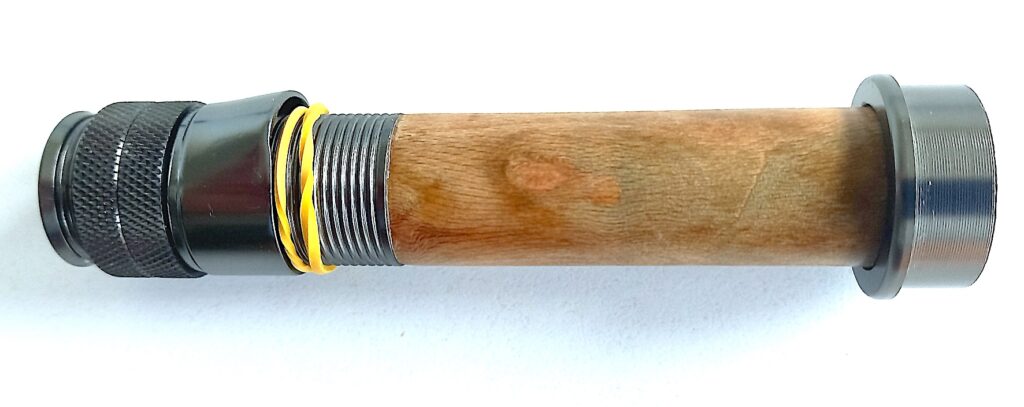
Držač čekrka sa izmenjenim drvenim umetkom od breze / Reel seat with the insert made of the spalted birch wood