

Grafit kao materijal za pravljenje štapova pojavio se nakon početne primene u vojnoj indistriji. Zbog svoje lakoće i konstrukcionih mogućnosti za podešavanje svojstava štapova, tokom decenija primene obezbedio je pravu malu revoluciju u izradi štapova za sve vrste ribolova. Što se mušičarskih grafitnih štapova tiče, tehnologija njihove izrade vremenom se usavršavala u nekoliko pravaca: povećanjem gustine grafitnih vlakana smanjenjem njihove debljine, gušćim pakovanjem vlakana dodatno pospešenim novim sastavima smola koje su primenjivane za povezivanje tih vlakana u listove, različitim pravcima pružanja vlakana kroz listove, kao i primenom više slojeva listova različite gustine vlakana i pravca njihovog pružanja u konstrukciji pojedinih sekcija višedelnih štapova radi dobijanja željenih svojstava pojedinih delova i štapova kao celine.
Ova evolucija razvoja grafita kao materijala i grafitnih štapova kao proizvoda sa puno tehničkih i komercijalnih oznaka kod različitih proizvođača (npr., SPC, Konetic, itd.) suštinski prilično nebitnih za mušičara traje i danas, nešto usporenije kako vreme ide, ali svake godine vodeći proizvođači štapova objave neku tehnološku novost vrlo tehničkog naziva. Nažalost, obično ne baš do kraja objašnjenu suštinom prednosti njenog uvođenja; najčešće je to da su štapovi kod kojih je primenjena bolji, lakši, finiji, osetljiviji i jači u odnosu na prethodne i konkurentne.
Mali je broj proizvođača koji prave grafitne listove i onih koji prave blankove, povezujući listove određenih svojstava smolama u više slojeva oko tzv. „mandrele“, metalnog konusna oko kog se obavijanjem listova dobijaju blankovi ili delovi blankova. Japan i Amerika prednjače u tome, ali je izrada blankova, a u novije vreme i gotovih štapova premeštena masovno u Kinu i Južnu Koreju. Neke indicije govore da se samo najnoviji modeli i tehnologije rade u Americi, a sve ostalo samo inžinjerski projektuje, a izrada je u Aziji.
Graphite as rod-making material emerged after its initial use for military purposes. Because of his lightness and constructive features convenient for adjusting the properties of fishing rods, it provided in decades of use a real revolution in the making of rods. As for the fly fishing graphite rods, a technology of their production has been perfected in several directions: increasing the density of graphite fibers by reducing their thickness, denser fibre packaging that was further enhanced by new resins that linked these fibers to sheets, different directions of fibers through sheets, as well as by applying multiple layers of sheets of different fiber density and the direction of their extending in the construction of certain rod sections for obtaining the desired properties of certain parts and entire rods. This evolution of the development of graphite as a material and graphite rods as products, with lots of technical and commercial markings at different manufacturers (e.g., SPC, Konetic, etc.) that are essentially quite irrelevant to the fly fishermen still lasts, slightly slower as time goes on, but every year the leading manufacturers of fly fishing rods publish some technological novelty of a very technical name. Unfortunately, usually not quite fully explained by the essence of its introduction’s advantage; most often it is that rods in which it was applied are better, lighter, nicer, more sensitive and stronger than previous ones. There are few manufacturers that make graphite sheets and blanks, packing the sheets of certain resin properties into multiple layers around the so-called „mandrells“, metallic cones around which sheet shrouds to obtain blanks or fragments of blanks. Japan and America are leading the way, but the production of blanks, and recently fly fishing rods has been moved en masse to China and South Korea. Some indications are that only the latest models and technologies are done in America, and everything else is only engineered there, and produced in Asia.
Blankovi
Blanks
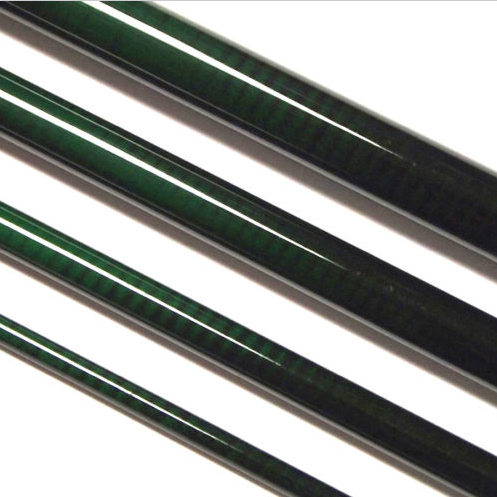
Gustina rasporeda vlakana grafita u listovima pojedinih delova ili celih blankova označava se oznakom „T“ i određuje tzv. „modulus“, koji određuje i svojstva listova. Po pravilu, oznaka „T“ preko 30 jedinica označava gusto spakovani („high modulus“) grafit. Broj slojeva grafitnih listova od kojih se sastoji blank po pravilu kod proizvođača nosi oznaku „IM“. Veći broj slojeva – veći IM broj govori istovremeno po pravilu i o tehnološki naprednijim i lakšim štapovima, ali ne obavezno i o njihovim opštim svojstvima, posebno ako se radi o onima kod kojih pojedini delovi imaju različitu gustinu vlakana („multi-modulus“) i različita svojstva. Svojstva štapova kao što su brzina, elastičnost, savitljivost i dr. kombinacija su svih tehnoloških stavki koje su gore navedene. Vreme nije samo uticalo na evoluciju tehnologije, već i na promenu „mode“ u pogledu svojstava štapova koji se nude na tržištu-dakle, blankova koji se proizvode. U početku, štapovi su bili dosta meki i spori, jer je tadašnja tehnologija to pružala, ali mnogo lakši od štapova od cepanog-„šplicanog“ bambusa i od stakloplastike (fiberglass-a). Posle toga usledilo je doba dominacije brzih (fast) i superbrzih (extrafast) mušičarskih štapova, da bi danas u komercijalnoj ponudi bili dominantni srednje- ili umereno-brzi mušičarski štapovi najpogodniji za široko tržište rekreativnih mušičara. U praktičnom smislu, više slojeva listova gušće pakovanog grafita olakšava i poskupljuje blank, dok ostala svojstva štapa (brzina, savitljivost) od kojih zavise bacačka svojstva i ponašanje pri zamaranju ulova ne moraju biti direktno vezana za konstrukcijske brojke. Savremeniji i tehnološki napredniji blankovi omogućili su povećanje dužina štapova preko 9 stopa (feet, ft), s tim da su njihova namena, svojstva i korišćenje sa zadovoljavajućim utiscima još uvek specifični. Za svakodnevnu rekreaciju, 9 stopa je plafon dužine provereno ugodnih mušičarskih štapova na otvorenijim vodama. Manje dužine štapova imaju svoje razloge i namene koje se moraju uvažiti za pojedine vidove mušičarenja i AFTMA klase kojima su svojstvene.
The density of the graphite fibre layout in the sheets of certain parts or whole blanks is marked „T“ and determines the so-called „modulus“, which also determines the properties of sheets. As a rule, a „T“ tag over 30 units (milions) denotes densely packed („high modulus“) graphite. The number of layers of graphite sheets the blank consists of bears the label „IM“. Multiple layers – greater IM number means both technologically advanced and lighter rods, but don’t determine necessarily their general properties, especially when it comes to particular parts having a different fiber density („multi-modulus“) and different properties. Fly fishing rod properties such as speed, elasticity, flexibility, etc., are a combination of all the technological features listed above. Time has not only affected the evolution of technology, but also the change in fashion in terms of the properties of fly fishing rods offered on the market, i.e., the blanks that are produced. At first, the rods were quite soft and slow, because the technology at the time provided it, but much lighter than the rods of spliced bamboo and fiberglass. This was followed by an era of dominance of fast and extra fast fly fishing rods, to be gradually replaced by the recently dominant moderately-fast fly fishing rods most suitable for the broad range of recreational fly fishermen. In practical terms, multiple layers of densely packed graphite sheets make rod blanks lighter and more expensive, while other rods’ properties (speed, flexibility) on which casting properties and their behaviour in fish playing depend do not have to be directly related to construction figures. More modern and technologically advanced blanks have enabled the length of fly fishing rods to increase over 9 feet (ft), but their purpose, properties and use with satisfactory imprints are still miscelaneous. For recreation, the 9-foot is the ceiling fly fishing rod’s length for pleasance in open waters. Smaller lengths of rods have their real reasons and special purposes that must be respected for certain forms of fly fishing and for AFTMA classes to which they are characteristic.
Provodnici mušičarskih štapova
Fly Fishing Rods’ Guides
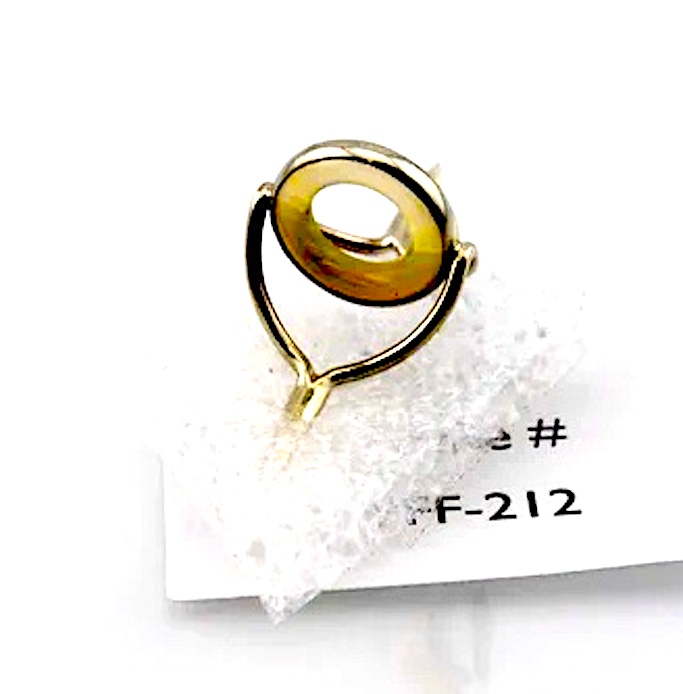
Oduvek su provodnici za mušičarske štapove bili žičani zbog nastojanja da štapovi budu što lakši. Samo su jedan ili dva najveća, osnovna provodnika dvostopni, sa kompozitnim ili mineralnim umetkom, tzv. „stripping guide(s)“ (za povlačenje strune, slobodno prevedeno). Pored silicijum-karbidnih (SIC) i hardloy umetaka, kod skupih samogradnji stavljaju se unikatni provodnici sa umetkom od ahata.
The guides for the fly rods in freshwater fishing have always been wired, because of attempting to make the rods as light as possible. Only one or two of the largest, stripping guides are double-foot, low-profile, with composite or mineral insert. In addition to silicon-carbide (SIC) and hardloy inserts, in expensive custom-buildings, guides with the agate insert of a unique fabrication are used.
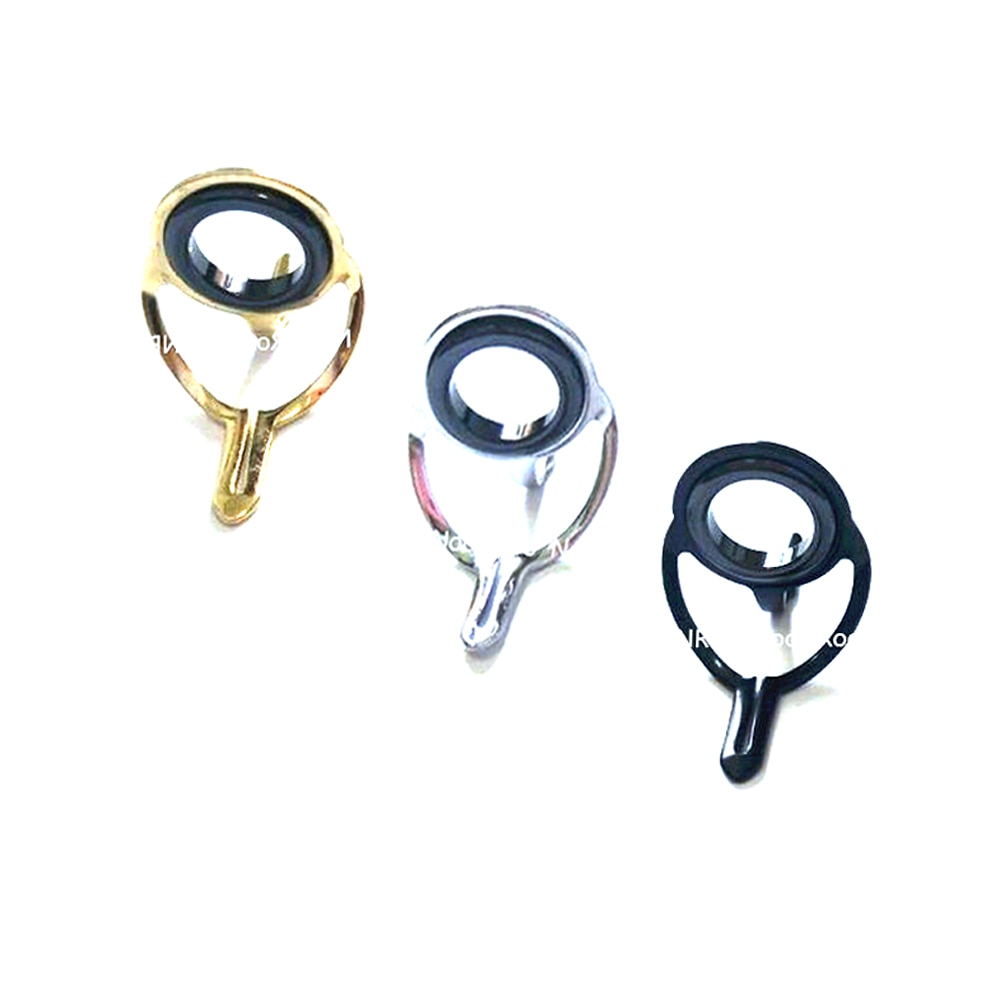
Žica od koje se mušičarski provodnici prave uvek je bila kvalitetna-čelična i dodatno zaštićena, kako bi što teže korodirala, oštećivala se strunom i predvezima i duže trajala. I vršni provodnici su takođe od žičane „petlje“ („loop“) i po pravilu, veličina otvora petlje je ista kao prečnik poslednjeg provodnika pred vršnim. Postoji više proizvođača provodnika, sa raznolikim cenama koje su verovatno srazmerne njihovom kvalitetu.
The wire from which the fly rod guides are made was always of quality-steel and additionally protected, in order to prevent corroding, damaging the fly line and extend its lasting. Tip guides are also made of wire „loop“ and by a rule, the size of the loop is the same as the diameter of the last guide preceeding it. There are several manufacturers of fly guides, with very different prices that are probably proportional to their quality.
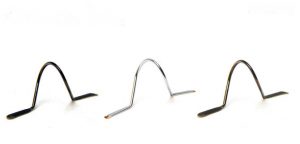
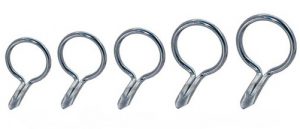
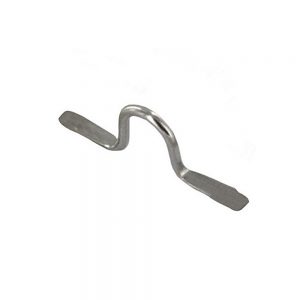
Po tipu, mušičarski provodnici mogu biti jednostopni i dvostopni. Obično se dvostopni nazivaju i „snake“. U suštini, većina jednostopnih provodnika su u stvari na istu stranu savijeni dvostopni i negde tvrde da je njihova prednost u manjoj količini namotanog konca na štapu i nanetog epoksidnog premaza. Za njihovo vezivanje potrebno je malo više pažnje, posebno prilikom završnog podešavanja pravca. Dvostopni provodnici u tom pogledu su komforniji za rad, iako ima više rada.
According to the type, the fly rod guides can be single- and double-foot, usually also referred to as „snake“. In essence, single-foot guides are actually the double-foot ones bent on the same side and their advantage is in the smaller amount of the winding thread and the epoxy coating applied. Tying them requires a little more attention, especially in final adjusting of their alignment. Double-foot guides in this regard are more comfortable to work with, even though there is more winding.
Od veličine otvora provodnika zavisi i dužina stopa i debljina žice od koje se pravi, a od znatnog značaja je i obrada oblika stopa kojom se olakšava namotavanje konca na njega. Sve ovo-kvalitet žice i završne obrade površine, debljina žice, a i boja utiču na cenu provodnika, a naročiti setovi za jedan štap mogu dostizati znatne vrednosti, jer su unikatno izrađeni, za one koji smatraju da im je to potrebno.
Po završnoj obradi, svi provodnici od čelika legiranih hromom mogu biti u srebrnoj, zlatnoj (sa dodatnim varijantama „šampanj“ ili „staro zlato“), crnoj, „titanijum“ (svetlo-sivoj) ili „gunsmoke“ (sivoj) boji. Po pravilu, svi provodnici na jednom štapu trebalo bi da budu istog tipa i u istoj boji, a po želji onog ko ih radi, mogu biti usklađeni i sa bojom hardvera držača čekrka, držača mušice u osnovi štapa i prstena („winding check“) na vrhu plute rukohvata štapa, ali to nije obavezno.
The size of the guide’s opening determines its foot length and the thickness of the wire, and of the considerable importance is the levelling of foot shape that makes easier wrapping. All this-quality of wire, finishing of surface, wire thickness, and colour of finish affect the price of guides, and special sets can reach great values, because they are uniquely made, for ones who need them.
Upon finishing, all chromium-steel guides can be in silver (i.e., chrome), gold (with additional variants of „champagne“ or „old gold“), black, „titanium“ (light grey) or „gunsmoke“ (grey) colour. As a rule, all guides on one rod should be of the same type and in the same colour of finish, and they can also be matched with the colour of the hardware of reel seat, fly hook keeper and the ring (winding check) which is at the top of the cork of the rod’s grip, but it is not mandatory.
Za prsten na vrhu plute, aluminijumski (u svim završnim obradama) ili gumeni (samo crni) najvažnije je da prečnicima, spoljnjem i unutrašnjem, što bolje odgovara mestu na kome se nalazi, a za držač mušice da je veličinom proporcionalan ostalim svojstvima štapa. Poželjno je da i bojom prati provodnike na štapu i hardver držača čekrka.
For the ring at the top of the cork handle, either aluminum (in all finishes) or rubber (black only), it is most important that it fits the cork handle and blank by its outer and inner diameters, respectively, and for the fly keeper that it is proportional in size. It is desirable for both of them to match to the guides on the rod and to the hardware of the reel seat in colour.
Držači mušičarskog čekrka
Fly Reel Seats
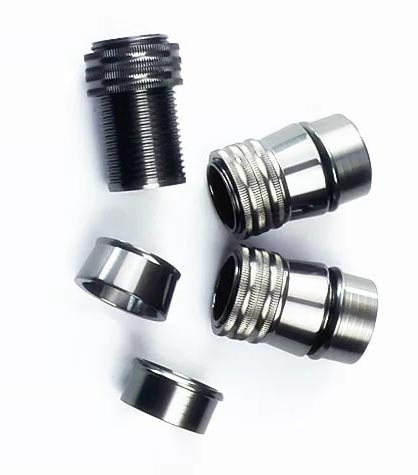
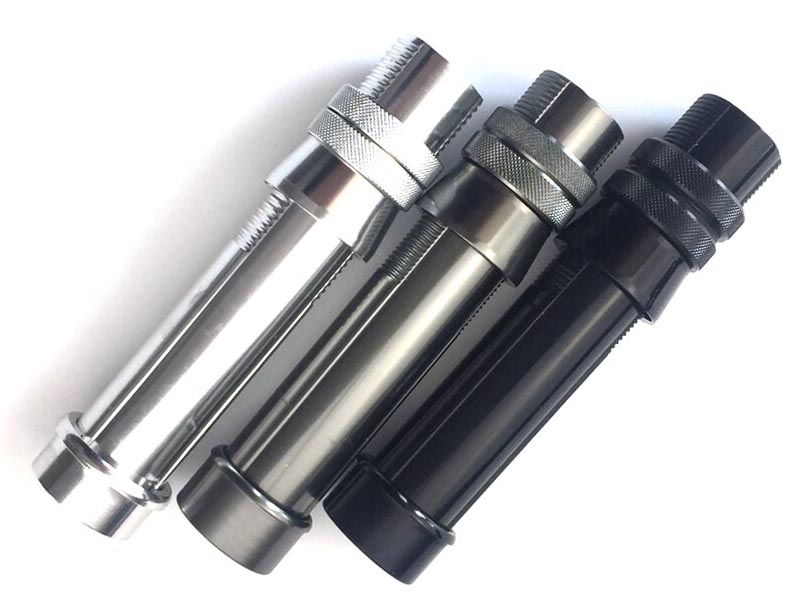
Verovatno predstavljaju deo mušičarskog štapa najraznovrsniji po tipu, strukturi, izgledu i nameni. Za razliku od potpuno aluminijumskih držača na morskim mušičarskim štapovima, kod slatkovodnih je drugačije.
This is probably part of a fly rod most diverse in type, structure, appearance and purpose. Unlike those on the sea fly rods that are completely of aluminium, freshwater reel seats’ hardware is much more diverse.
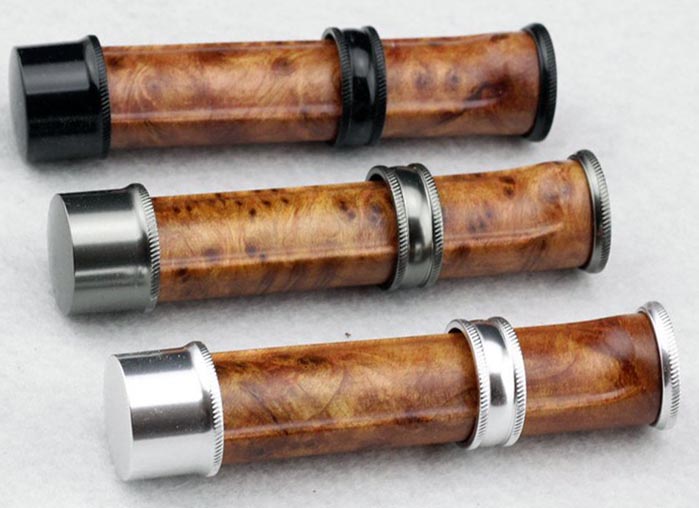
Najlakši držači su od plute ili tvrđeg drveta, sa dva aluminijumska prstena koji drže stope čekrka i teže 5 – 10 g, a koriste se za štapove klasa #0 – #3, retko na onima većih AFTMA klasa. Mana im je manja trajnost i slabost, ali za ove fine štapove i opterećenja koja trpe, sasvim su dovoljno jaki, samo ne treba primenjivati na prstenove veliku silu pri stavljanju čekrka.
The lightest reel seats are made of cork or hardwood, with two aluminium rings holding reel foot and weighing 5 – 10 g. They are used for rods of the classes #0 – #3, rarely on those of the greater AFTMA classes. Their weakness is less durability, but for these fine rods and the loads they sustain, they are strong enough, if a great force when putting a reel is not applied to rings.
Standardni držač čekrka za mušičarske štapove klasa #3 – #6 može biti „uplocking“ (prsten se navojem pomera napred ka osnovi plutane drške gde se prednji kraj stope čekrka fiksira) i „downlocking“ tipa (pričvršćuje čekrk guranjem prstena koji drži prednji kraj stope čekrka niz navoj ka zadnjem kraju držača čekrka i štapa). Nema velike razlike u balansiranju štapa držačem čekrka bilo kog tipa, pa je odabir tipa držača samo stvar izbora.
Standard reel seats for class #3 – #6 fly fishing rods can be „uplocking“ (the screw-driven ring pushes rear reel’s foot holder towards the base of the grip of the rod to the fixed front foot holder) and „downlocking“ type (attaches the reel by pushing the ring of the front foot holder down to the fixed rear holder at the butt end of the reel seat). There are no big differences in balancing the rod with the reel seat of either type, so the type is a matter of choice.

Ono što se umnogome razlikuje, jeste izgled (obrada i boja) površine metalnih, aluminijumskih ili mesinganih delova držača i tip drvenog umetka držača i njegova završna obrada (sjajan, polu-mat, mat, impregniran lanenim uljem ili firnajzom) ili poliakrilnih umetaka, koji uglavnom diktiraju i cenu držača čekrka.
What differs greatly is the appearance of the metal, aluminium or brass parts of the reel seat and the type of wooden insert and its finishing (glossy, semi-matte, matte, impregnated with linen or soybean oil-based impregnator), or of polyacrylic inserts, which generally dictate the price of the reel seat.
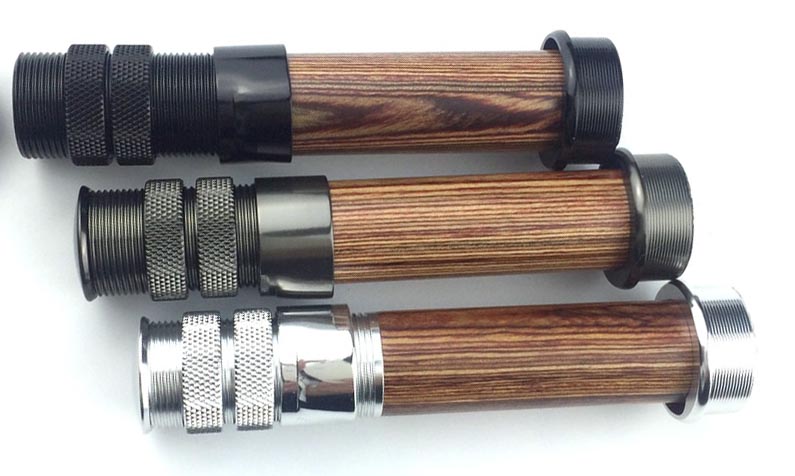
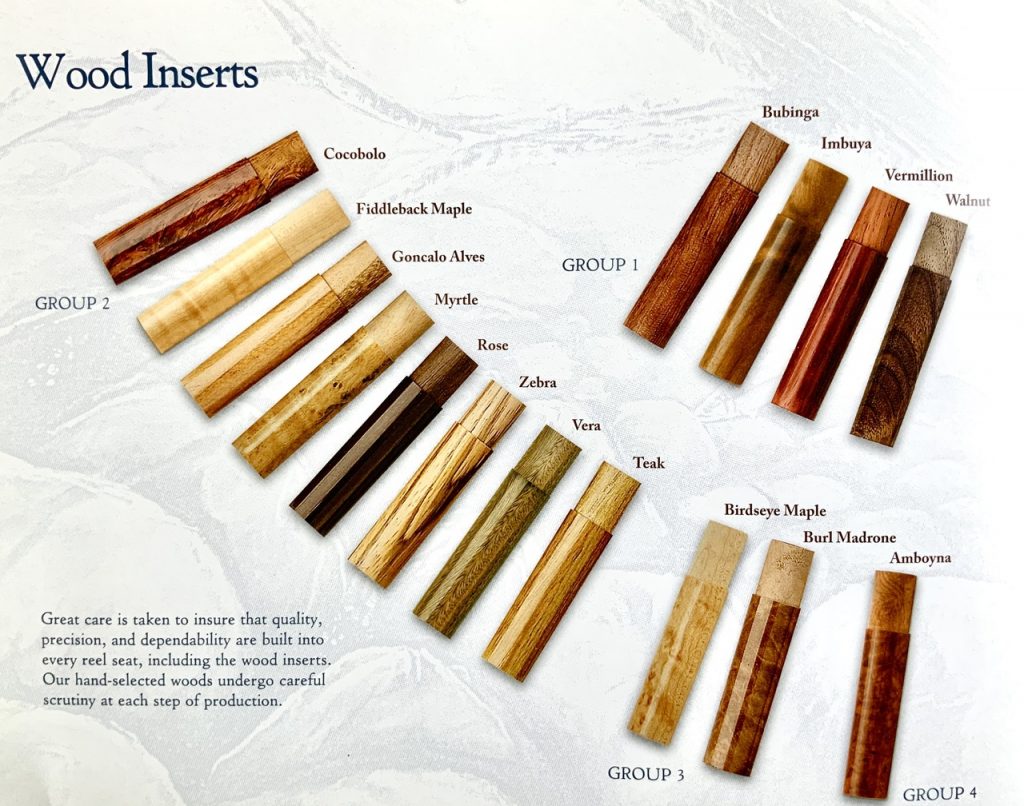
Najčešće se za drvene umetke koriste drvo afričke ruže – komadi ili laminirano, orah (američki), javor, ali ima i drugih egzotičnih umetaka, npr. bubinga, kokobolo, ebonos, amboyna, kamfor, mirta i dr. Dodatno, i način izrade preseka daje posebne teksture drvenih umetaka. Egzotičnost i retkost određuju cene umetaka i ukupnu cenu držača čekrka, pa tako vrlo kvalitetni, naglašeno rukom birani umetci pojedinih vrsta drveta u perfektnoj završnoj obradi sami mogu koštati $17.95, a celi držači čekrka mogu dostići i $60, pa i više.
Most commonly used for wooden inserts are African rose wood – whole piece or laminated, walnut (American), maple, but there are also other exotic inserts, for example bubinga, cocobolo, ebony, amboyna, camphor, myrtle, etc. Additionally, the way of cutting the section of wood gives special textures of wood inserts. Exoticism and rarity determine the prices of the insert and the total cost of the reel seats. High-quality, hand-selected inserts in perfect finish can cost themselves $17.95, and whole reel seats reach in price $60 and even more.
Po pravilu, držači čekrka koji imaju manje-više standardne drvene umetke u ponudi pojedinih proizvođača mogu se relativno brzo (najčešće do mesec dana) dobiti poštom. Neki proizvođači i trgovci voljni su da izađu u susret i za posebne želje, ali to može znatno (i više od dva meseca) produžiti rok izrade štapa. O tome svakako naručilac štapa treba da donese odluku.
By rule, reel seats of particular producers that feature the common wood inserts are relatively easy to get by mail (usually in a month or so). Some producers and traders are ready to meet the customers’ special demands for wood insert, but that can remarkably (even more than two months) prolong the crafting of rod. That is by all means up to rod owner’s decision.
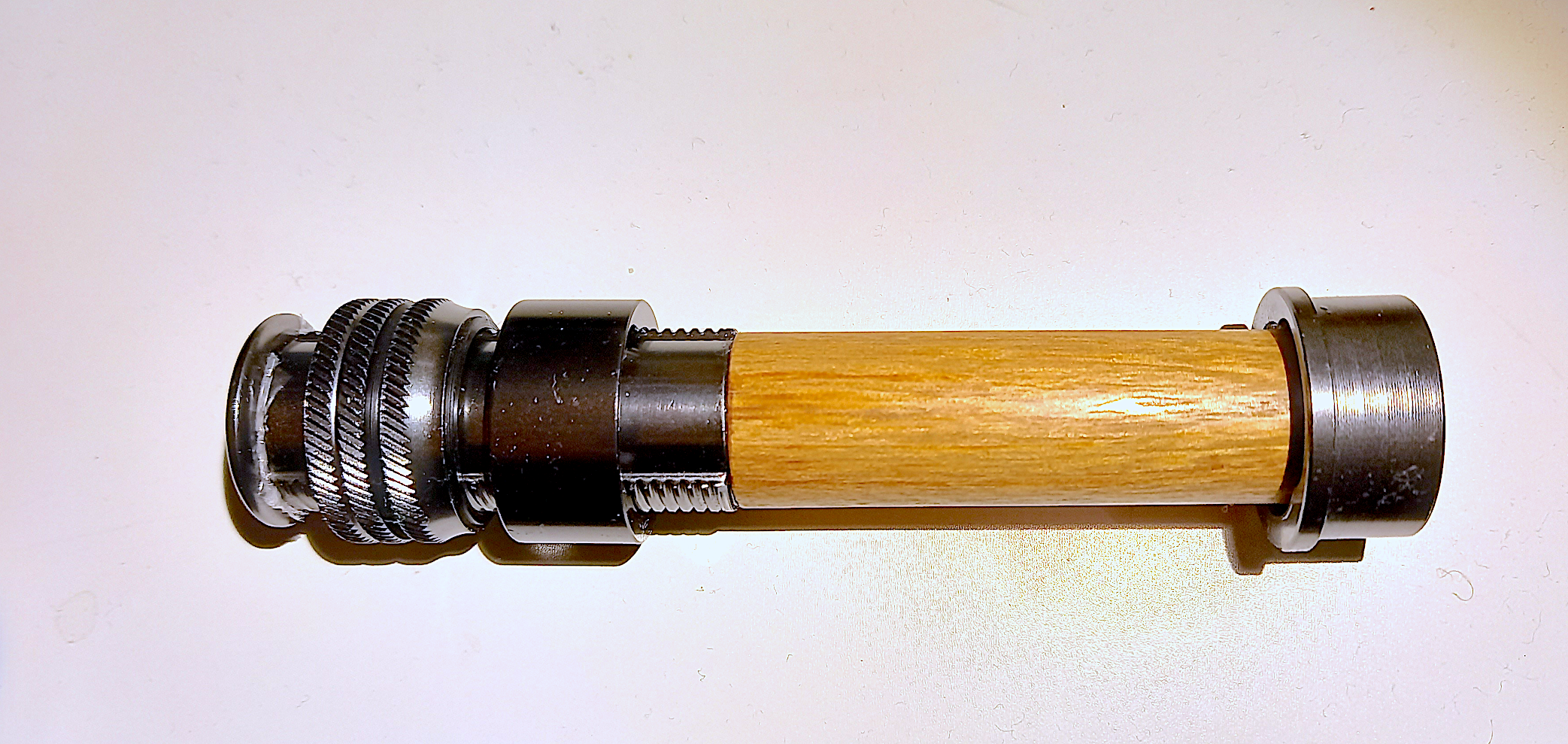
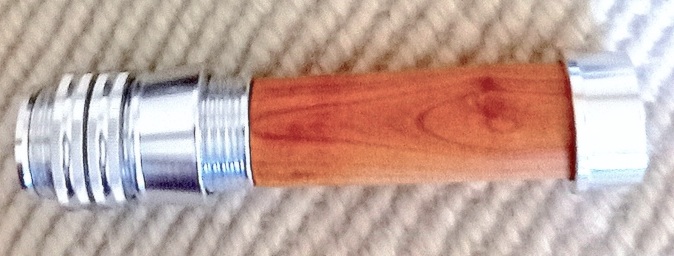
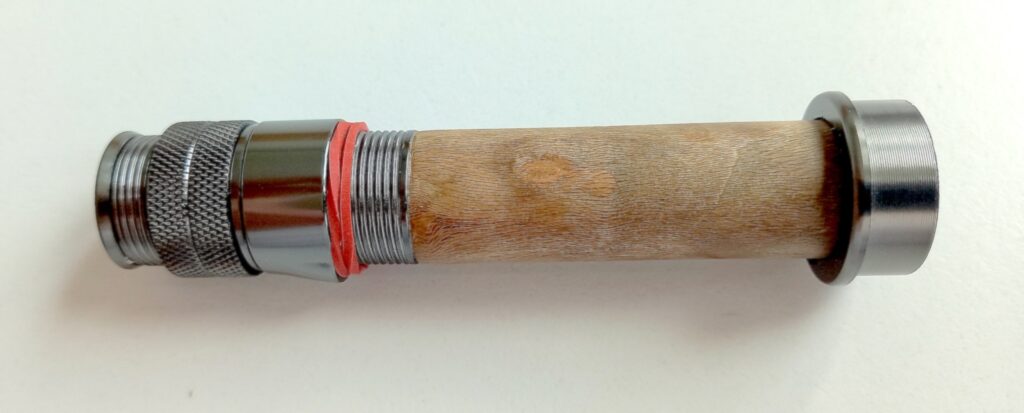
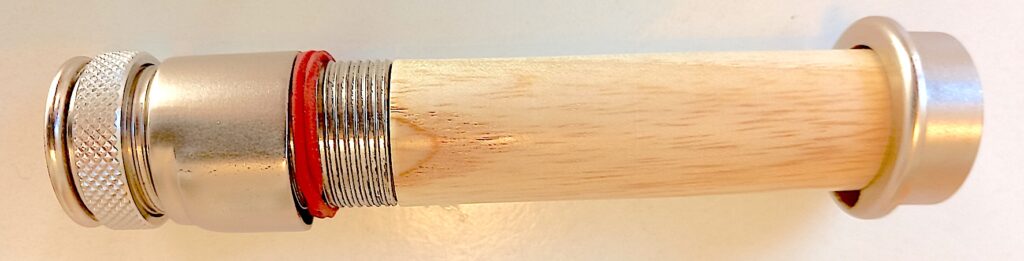
Četiri različita držača čekrka sa različitim tipovima hardvera („skeleta“) i ručno pravljenim drvenim umecima od domaćih vrsta drveća: bagrema Robinia pseudoacacia (gore levo), trešnje Prunus avium (gore desno), orijentalnog platana Platanus orientalis (dole levo) i jasena Fraxinus excelsior (dole desno)/ Four different reel seats with different types of hardware (skeleton) and hand-made wood inserts made of native tree species: black locust Robinia pseudoacacia (top left), cherry Prunus avium (top right), oriental plane Platanus orientalis (bottom left) and ash Fraxinus excelsior (bottom right).
Iako deluje jednostavno, izrada držača čekrka sadrži prilično koraka. Drveni umeci se mogu uraditi i od naših vrsta drveća, za različite tipove metalnih (aluminisjumskih) delova-„skeleta“ držača čekrka koji su različitih dimenzija, težine i namene. Da bi se umeci napravili, drvo mora biti pripremljeno: osušeno, isečeno do pogodnog oblika, precizno obrađeno na strugu sa tolerancijom od 1/10 mm i spojeno sa metalnim delom tako da bez zastoja hvata, i čvrsto drži i lako pušta stopu mušičarskog čekrka. Iako se mogu zaštititi i lakirati na različite načine, drvene umetke je dovoljno zaštititi od uticaja vlage uljem od semenki lana ili firnajzom sa lanenim ili sojinim uljem onoliko koliko je potrebno.
Although seems a simple work, crafting of reel seats has several steps. Wood inserts can be crafted from native tree species, as well, for different types of metal (aluminium) skeletons of reel seats of various dimensions, weight and purpose. To craft wood inserts, the wood must be prepared: dried, cut to shape, precisely turned on the lathe with the tolerance of 1/10 mm and assembled with the metal hardware in such a way to capture, hold firmly and release easily the reel seat’s foot. Although can be impregnated and varnished in a variety of ways, it is essentially sufficient to protect inserts well from moisture with the linseed oil or Tru Oil containing either linseed or soybean oil.
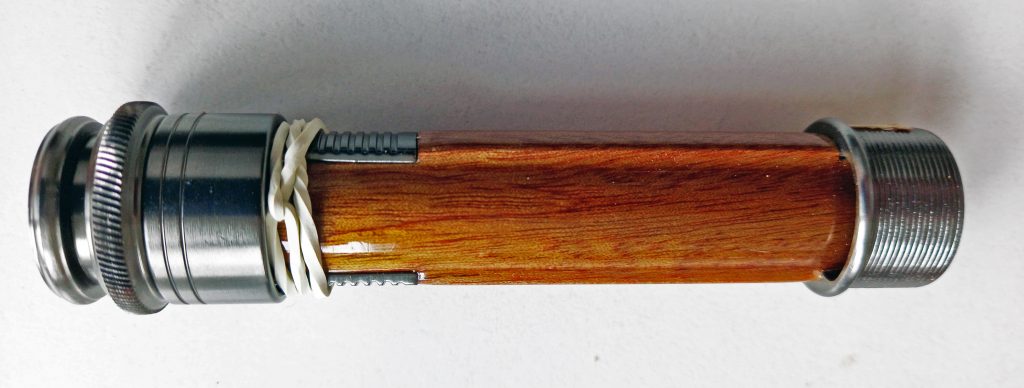
U novije vreme, za držače čekrka rade se i jednobojni umetci od grafita u raznim bojama koji se mogu lepo složiti sa bojom blanka i nisu cenom nedostupni, kao i oni od akrilne smole, a mogućnosti i ranovrsnost njihove izrade su neizmerne. Kako su akrilni umetci unikatni, i cene mogu da im budu visoke, mada ima i proizvođača relativno umerene cene, ali još uvek više od držača sa drvenim umetcima. Odabir držača čekrka stvar je ukusa, a onda i cene koju treba platiti. Funkcionalno su potpuno isti, sem što treba imati u vidu da će njihova težina zajedno sa težinom čekrka (uglavnom u standardnim rasponima za određene AFTMA klase) balansirati štap i činiti celodnevni ribolov ugodnijim.
Recently, the graphite inserts are manufactured for reel seats, to match nicely to the blank colour at affordable price, as well as those made of acrylic resins, of the immense opportunities in designing them. As those acrylic inserts are unique, their prices can be high. Although there are crafters whose prices are moderate, they are still greater than those of reel seats with the wooden inserts. Choosing a reel seat is a matter of taste, and then the price. They are functionally exactly the same, but one should think about that the summary weight of reel seat and the reel will balance the rod and make whole-day fishing more pleasant.
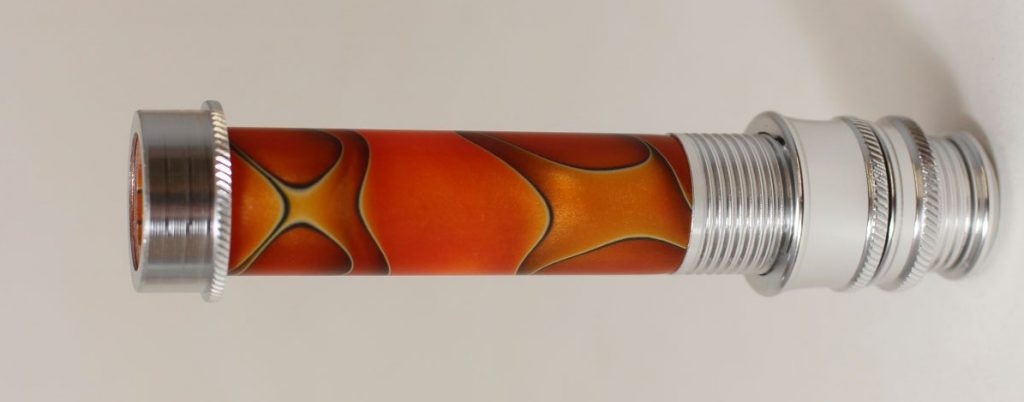
Obično su držači za štapove većih AFTMA klasa sa dvostrukim navojnim prstenovima, dok su oni za lakše štapove nižih klasa sa jednim prstenom i njihova težina ide od 25 – 35 g, zavisno od izrade metalnog hardvera i težine drvenog ili drugačijeg umetka. Postoji mnogo marki i tipova držača, tako da delovi koji su na njima nisu međusobno kompatibilni. Cene držača pojedinih proizvođača koji se ugrađuju u najbolje modele štapova renomiranih proizvođača mogu da premaše daleko preko $100. Cene unikatnih držača koji se graviraju bogato nisu poznate; takvi štapovi prodaju se u četvorocifrenim dolarskim iznosima.
Typically, the reel seats for larger AFTMA class rods are with double screwing rings, while those for lesser AFTMA class rods are with single ring. They weight 25 – 35 g, depending on the material of metal hardware and the weight of wooden or other inserts. There are many brands and types of reel seats, so the parts on them are not interchangeable. The prices of reel seats produced in factories that are fitted in the best models of rods of renowned fly rod manufacturers can exceed well above $100. The prices of reel seats that are unique and richly engraved in details are unknown; such rods are sold in four-digit dollar amounts.
Rukohvati mušičarskih štapova
Fly Rods’ Grips

Iako se za rukohvate mogu koristiti EVA guma, različite vrste tvrdog drveta i čak i ratan, na grafitnim mušičarskim štapovima pluta se koristi najviše. Postoje prstenovi plute različitog kvaliteta-klase i već urađeni rukohvati koji se izrađuju lepljenjem tih prstenova i obradom. Najviši kvalitet plute koja se koristi za izradu rukohvata je tzv. „floor grade“ kvalitet, a iza njega je „supreme“. Plutu tih klasa ugrađuju u najkvalitetnije komercijalno rađene štapove i nije lako naći takvu plutu za samogradnju. Najviša široko dostupna klasa je AAA, a najniža je A. Rukohvat od plute „floor grade“ klase oko tri puta više košta od rukohvata AAA klase. Postoje i rukohvati sa gumiranom plutom, celom ili delimično, kao i brojne druge modifikacije. Najbolja klasa plute podrazumeva da je ona bez pukotina, a najlošija ima dosta pukotina većeg obima ili dubine. To se delimično može popraviti u estetskom pogledu, ali ostane primetno. U funkcionalnom pogledu, nema razlike ni u čemu, a postoji način da se pluta dok je još nova „konzervira“, bez narušavanja osećaja u ruci, a uz znatno produženje njene trajnosti, sprečavanje nastanka pukotina, smanjenje prljanja pri korišćenju i olakšavanje njenog čišćenja i pranja.
Although fly fishing rods’ grips can be made of EVA, various hard woods and even of the ratan, the cork is most commonly used in the graphite fly rods. There are cork rings of various quality, i.e., classes and finished handles made of them by bouncing and shaping them. The highest quality of cork is the floor grade class, followed by supreme class. Cork of those classes is used for the branded fly rods of the highest quality and it is difficult to find it in the market for custom rod making. The highest widely available class is that of the AAA and the lowest one is A. Grip made of the floor grade cork costs about three times more than that made of the AAA grade cork. Recently, there are also grips crafted of the rubberized cork, entirely or partly. The best class of cork is without cracks, while the worst one is with a lot of them of various extending and depth. That can be partly corrected in aesthetic sense, though remains visible. Functionality of grips of various grade is the same regardless of the class of cork and there are ways to conserve the cork grip that retains its feeling in hand, while extending its lasting, preventing the cracking of it, reducing catching of dirt and enhancing its cleaning and washing.
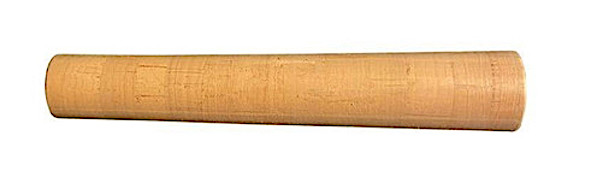
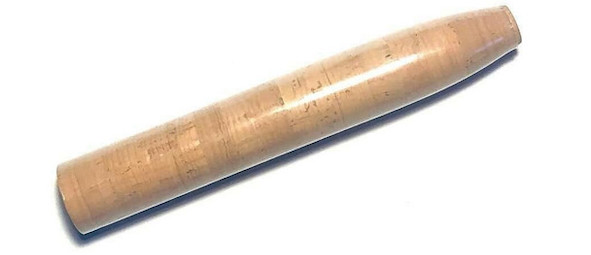
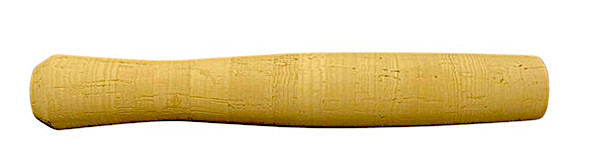
I oblici rukohvata mogu da se razlikuju. Uobičajen za jednoručne mušičarske štapove klasa #3 – #6 je oblik „half wells“, za jednoručne i dvoručne štapove klasa viših od #5 je oblik „full wells“ sa dodatnim delom na kraju štapa („fighting but“), dok kod starijih mušičarskih štapova od cepanog bambusa i stakloplastike postoje i rukohvati oblika cigare, „Fenwick“ ili „Ritz“ oblika.
The shapes of cork grip can be various. For one-handed fly rods of the AFTMA classes #3 – #6 the most common shape is half wells, for the one- and two-handed rods of the classes greater than #5 it is full wells with the additional fighting butt at the rod grip’s butt, while in the fly rods made of spliced cane and fibreglass cork grips of the cigar, „Fenwick“ and Ritz shapes are also common.